

Jeff Jarvis from Davos
"And so they don’t yet see that the internet will shift power even more than they realize.
And it’s certainly true that the internet enables each of us to find the information that matters to us, to publish what we think, and do what we want.
The internet is more about collective action. It is about connections.
In media terms, I said at Davos and here on the blog that we have seen a small-scale version of this progression:
1. First, big media let us interact with them, about their stuff.
2. Then big media beg us to give them our stuff.
3. Now we realize that our stuff is ours — not user-generated content for the big guys — and we expect them to come to us.
It means that all our stuff makes up the corpus of media, that we have the means of creation (bless my Mac and WordPress), marketing (that is, linking), and now distribution (thank you, YouTube).
Now we can form our own coalitions to reach the critical mass still needed to be heard and to act.
Critical mass will rise and a just society — the kind of society we all want — will not allow the tyranny of a minority or, in the case of a dictator, the minority of one. Society is balance and the internet is a new balancer."
I do not quite believe it.
I would say:
Critical mass could rise...
"So we see a similar path as in media:
1. The powerful realize they have no choice but to let you speak (even in China and the Middle East).
2. The powerful are forced to listen.
3. The powerful will realize that this isn’t just about mutual discussion but mutual decision.
I believe, the future is not about establishing social networks as walled playgrounds but instead realizing that the internet is the social network.
If they really thought they were about to be overthrown by bloggers, would they sound quite so cheerful about it?
This is the best indication that they don’t yet comprehend the impact of the internet — they don’t, as we say, get it.
So let them think that interactivity and social networks are ways for us to amuse ourselves while they still wield the power. They will wake up one day and realize they no longer own the world and can no longer look down at it from the top of the mountain,that the job of media — and, for that matter, government, business, and technology — is to bring people together to find distributed and elegant solutions to their problems. That is not web 3.0. That’s society 2.1. And we’ve only just begun. "
Well I think many of them have already understood the Internet lesson.
Many have become bloggers themselves.
Many are using the Internet as a new way to reach an audience.
And many are actually quite succesful (see Beppe Grillo in Italy)
The simple reason is not in the fact that the Intenet is about individualism or communication.
The simple reason is that the people (mostly young people and among them I include us, members of the "boom generation") spend many hours a day on the Internet.
And the Market follows the people, doesn't it?
Friday, February 02, 2007


PPP versus Jeff Jarvis
"What irritates me is that Jeff Jarvis displays advertisements on his blog. How is that different from what I do via PPP?? "
The difference is that HE gets 5000$ and you (and me) 5.
And I am not saying that it is not fair.
He is a much better writer than me, and so he deserves more.
What I say is that the Advertisers do not care where their advertisements are, as long as they produce a ROI.
And the fact that PPP is quite succesful means that, may be having 10.000 blogs talking about you, produces a better revenue than one blog with PR9 can.
But I go much further.
Everybody is looking for the Killer Application, the bomb that is going to produce a lot of noise and bring a lot of millions to the one who produces it.
I think that it is time to look at the market from a different point of view.
And that is the Killer Application that actually brings jobs and not sales.
In a world where the producers are few and share 99% of the revenues it is getting hard to find new customers.
And no Killer application is going to bring many more buyers, if the buyers do not have the money to spend.
In a few words:
When the income is not shared, but concentrated in the hands of few, how to find customers?
So, welcome business models like PPP where the income is shared among many who will spend it and create new jobs, which will create new incomes and so on...
That is how the consumistic, capitalistic society was built and grew. May be is not the best model, but IT WORKS...
Long live PPP!!!
PS. Jeff jarvis is a wonderful writer and a wonderful mind.
I go daily to his blog and I honestly find it very interesting.
But sometimes he reminds me one of those beautiful buildings built 300 years ago which have narrow windows, because at that time they didn't have oil and winters were much colder than today.
Well, when you compare those buildings to the glass ones of today you see what I mean.
Light is everything and big windows are like open minds.
They let the light in...
It is true, I love old buildings, they are beautiful, but life is so much more comfortable in the new ones...
Belisi Take off that Tie Campaign
Dear Peter,
or I should write caro Pietro, but it sounds better in English...
These are going to be the most difficult earned 12$ since I joined PPP and I still do not know if and when they will approve this post...
I believed ties were out of fashion.
But I probably am a little bit backward or already forward...
With fashion you never know.
What was fashionable yesterday isn't anymore today and viceversa...
I am old enough to remember the fashion of the 60s and 70s and 80s and I like to pick up something from there and something else from today and mix it...
In principle that is style. Following fashion and picking what suits you.
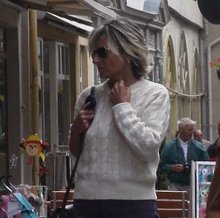
This is my picture for "Take off that tie" and I will call it:

Every status has its symbol, and every symbol has its status...
Belisi Take off that Tie Campaign
Just for the readers of this post:
"Belisi is a luxury designer of high-end silk ties, scarves and women's handbags. The Belisi brand unites the luxury and prestige of Palm Beach with Italian beauty and sophistication. Each dramatic detail represents Belisi's unwavering quest to offer fashion accessories of truly enduring value. What sets the Belisi brand apart is its commitment to people. In line with its mission to create "luxury with meaning", a portion of the proceeds are donated to a local charity. Put simply, Belisi stands for beauty: great style, quality accessories and giving back to the community. "
And it looks like he IS ITALIAN!

This is a sponsored post, please read disclosure policy.
or I should write caro Pietro, but it sounds better in English...
These are going to be the most difficult earned 12$ since I joined PPP and I still do not know if and when they will approve this post...
I believed ties were out of fashion.
But I probably am a little bit backward or already forward...
With fashion you never know.
What was fashionable yesterday isn't anymore today and viceversa...
I am old enough to remember the fashion of the 60s and 70s and 80s and I like to pick up something from there and something else from today and mix it...
In principle that is style. Following fashion and picking what suits you.
This is my picture for "Take off that tie" and I will call it:
Every status has its symbol, and every symbol has its status...
Belisi Take off that Tie Campaign
Just for the readers of this post:
"Belisi is a luxury designer of high-end silk ties, scarves and women's handbags. The Belisi brand unites the luxury and prestige of Palm Beach with Italian beauty and sophistication. Each dramatic detail represents Belisi's unwavering quest to offer fashion accessories of truly enduring value. What sets the Belisi brand apart is its commitment to people. In line with its mission to create "luxury with meaning", a portion of the proceeds are donated to a local charity. Put simply, Belisi stands for beauty: great style, quality accessories and giving back to the community. "
And it looks like he IS ITALIAN!
This is a sponsored post, please read disclosure policy.
Google's heart
The soul of the Google machine is a passion for disruptive innovation.
Powered by brilliant engineers, mathematicians and technological visionaries, Google ferociously pushes the limits of everything it undertakes. The company's DNA emanates from its youthful founders, Sergey Brin and Larry Page, who operate with "a healthy disregard for the impossible," as Page likes to say. Their goal: to organize all of the world's information and make it universally accessible, whatever the consequences.
Google's colorful childlike logo, its whimsical appeal and its lightning-fast search results have made it the darling of information- hungry Internet users. Google has accomplished something rare in the hard-charging, mouse-eat-mouse environment that defines the high-tech world -- it has made itself charming. We like Google. We giggle at the "Google doodles," the playful decorations on its logo that appear on holidays or other special occasions. We eagerly sample the new online toys that Google rolls out every few months.
But these friendly features belie Google's disdain for the status quo and its voracious appetite for aggressively pursuing initiatives to bring about radical change. Google is testing the boundaries in so many ways, and so purposefully, it's likely to wind up at the center of a variety of legal battles with landmark significance.
Consider the wide-ranging implications of the activities now underway at the Googleplex, the company's campuslike headquarters in California's Silicon Valley. Google is compiling a genetic and biological database using the vast power of its search engines; scanning millions of books without traditional regard for copyright laws; tracing online searches to individual Internet users and storing them indefinitely; demanding cell phone numbers in exchange for free e-mail accounts (known as Gmail) as it begins to build the first global cell phone directory; saving Gmails forever on its own servers, making them a tempting target for law enforcement abuse; inserting ads for the first time in e-mails; making hundreds of thousands of cheap personal computers to serve as cogs in powerful global networks.
Google has also created a new kind of work environment. It serves three free meals a day to its employees (known as Googlers) so that they can remain on-site and spend more time working. It provides them with free on-site medical and dental care and haircuts, as well as washers and dryers. It charters buses with wireless Web access between San Francisco and Silicon Valley so that employees can toil en route to the office. To encourage innovation, it gives employees one day a week -- known as 20 percent time -- to work on anything that interests them.
To eliminate the distinction between work and play -- and keep the Googlers happily at the Googleplex -- they have volleyball, foosball, puzzles, games, rollerblading, colorful kitchens stocked with free drinks and snacks, bowls of M&Ms, lava lamps, vibrating massage chairs and a culture encouraging Googlers to bring their dogs to work. (No cats allowed.) The perks also include an on-site masseuse, and extravagant touch-pad-controlled toilets with six levels of heat for the seat and automated washing, drying and flushing without the need for toilet paper.
Meanwhile, the Googlers spend countless hours tweaking Google's hardware and software to reliably deliver search results in a fraction of a second. Few Google users realize, however, that every search ends up as a part of Google's huge database, where the company collects data on you, based on the searches you conduct and the Web sites you visit through Google. The company maintains that it does this to serve you better, and deliver ads and search results more closely targeted to your interests. But the fact remains: Google knows a lot more about you than you know about Google.
If these were the actions of some obscure company, maybe none of this would matter much. But these are the practices of an enterprise whose search engine is so ubiquitous it has become synonymous with the Internet itself for millions of computer users. And if the Google Guys have their way, their presence will only grow. Brin and Page see Google (its motto: "Don't Be Evil") as a populist force for good that empowers individuals to find information fast about anything and everything.
Part of Google's success has to do with the network of more than 100,000 cheap personal computers it has built and deployed in its own data centers around the world. Google constantly adds new computers to its network, making it a prolific PC assembler and manufacturer in its own right. "We are like Dell," quipped Peter Norvig, Google's chief of search quality.
The highly specialized world of technology breaks down these days into companies that do either hardware or software. Google's tech wizards have figured out how to do both well. "They run the largest computer system in the world," said John Hennessy, a member of Google's board of directors, a computer scientist and president of Stanford University. "I don't think there is even anything close."
Google doesn't need all that computer power to help us search for the best Italian restaurant in Northern Virginia. It has grander plans. The company is quietly working with maverick biologist Craig Venter and others on groundbreaking genetic and biological research. Google's immense capacity and turbo-charged search technology, it turns out, appears to be an ideal match for the large amount of data contained in the human genome. Venter and others say that the search engine has the ability to deal with so many variables at once that its use could lead to the discovery of new medicines or cures for diseases. Sergey Brin says searching all of the world's information includes examining the genetic makeup of our own bodies, and he foresees a day when each of us will be able to learn more about our own predisposition for various illnesses, allergies and other important biological predictors by comparing our personal genetic code with the human genome, a process known as "Googling Your Genes."
"This is the ultimate intersection of technology and health that will empower millions of individuals," Venter said. "Helping people understand their own genetic code and statistical code is something that should be broadly available through a service like Google within a decade."
Brin's partner has nurtured a different ambition. For years, Larry Page dreamed of tearing down the walls of libraries, and eliminating the barriers of geography, by making millions of books searchable by anybody in the world with an Internet connection. After Google began scanning thousands of library books to make them searchable online, book publishers and authors cried foul, filing lawsuits claiming copyright infringement.
Many companies would have reached an amicable settlement. Not Google. Undaunted, Google fired back, saying copyright laws were meant to serve the public interest and didn't apply in the digital realm of search. Google's altruistic tone masked its savvy, hard-nosed business strategy -- more books online means more searches, more ads and more profits. Google recently began displaying some of these books online (print.google.com), and resumed scanning the contents of books from the collections of Harvard, Stanford, the University of Michigan, the New York Public Library and Oxford. But legal experts predict that the company's disruptive innovation will undoubtedly show up on the Supreme Court's docket one day.
From Madison Avenue to Microsoft, Google's rapid-fire innovation and growing power pose a threat of one kind or another. Its ad-driven financial success has propelled its stock market value to $110 billion, more than the combined value of Disney, Ford, General Motors, Amazon.com and the media companies that own the New York Times, the Wall Street Journal and The Washington Post. Its simplified method of having advertisers sign up online, through a self-service option, threatens ad agencies and media buyers who traditionally have played that role. Its penchant for continuously releasing new products and services in beta, or test form, before they are perfected, has sent Microsoft reeling. Chairman Bill Gates recently warned employees in an internal memo of the challenges posed by such "disruptive" change.
By David A. Vise
The human touch in virtual reality
The 2nd Industrial Virtual Reality Show & Conference was held on June 22-25 at the Makuhari Messe near Tokyo.
According to the speaker Virtual Reality has emerged from different perspectives, like tele-robotics, CAD, human-interface for computer science, simulators, art and amusement, and tele-communications.
Virtual Reality should consist of a life-size 4-dimensional environment, integration of all human senses, interactivity, and multi-user sharing of the virtual space.
The Cyber-space system of networked users is not only applicable for entertainment, but easily extendable to tele-shopping, tele- concerts and tele-education.
Or as in this case for registration to event planning.
The Internet is more and more a virtual world, but it still lacks the "human touch" to completely involve the customers.
Interactivity is good, but talking is better.
Ask 1000 people and 99% will answer that a telephone call is still much better than instant messaging.
The fortune of it was just in the fact that writing on a computer is much, much, cheaper than talking on a phone and the cheap VoIP do not have quality enough many times to allow a good conversation.
So, what do I think of the human voice on a website?
Words are more immediate. We all heard the human voice before seeing our mother's face.
We all were used to noise much sooner than seeing the world outside.
Aristotle wrote:
Spoken words are symbols of mental experience and written words are the symbols of spoken words.
I personally prefer the symbol to the symbol of the symbol.
This is a sponsored post, please read disclosure policy.
Subscribe to:
Posts (Atom)
 Stumble It!